
Skip to content

X-CITED Communities

The X-CITED Communities:

You build the tech. You run the facilities. You make research happen. Now connect with people who get it.

Hundreds of technical experts in engineering and physical sciences across Bath, Bristol, Cardiff, and Exeter are doing work like yours—designing experiments, maintaining equipment, developing new methods. But you’ve probably never met most of them.

X-CITED Communities change that.


Why join?

  • Find your people. 

  • Connect with specialists in your field across all four GW4 universities.

  • Share solutions

  • Learn from each other’s wins and failures.

  • Stop reinventing the wheel – someone’s already solved that problem. Get direct access to expertise and best practice from people doing similar work.

  • Shape your development. – tell us what training you actually need. Communities identify skills gaps that matter to you and your work.

  • Get visible – we’re building a GW4-wide capability register so researchers and industry can find the expertise that exists. No more hiding in departments.

  • Have a voice – raise concerns, share what’s working, influence how technical professionals are supported. This is your platform.
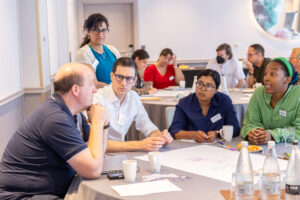

The X-CITED Communities will cover three broad technical areas across the breadth of the engineering and physical sciences domain within GW4 institutions:

1. X-CITED Digital Community

Who is it for?

For research software engineers, data scientists, data stewards, HPC specialists, informaticians, digital archivists, research IT, and everyone building digital infrastructure for research.

What we do:

  • Share knowledge and break down silos across GW4
  • Solve each other’s problems and swap expertise
  • Learn together through speakers and bespoke training
  • Discover cutting-edge facilities across GW4 (Bristol’s VR cave, Exeter’s VSimulators)

Recent highlights:

Prompt engineering training, user-centred design workshop, cross-institution collaborations improving team processes


2. Engineering Community

  • This Community will comprise those working in mechanical testing. Examples of this may include material characterisation through methods of tension, compression, torsion, fatigue and other similar and related techniques, along with large- and small-scale static and dynamic testing of structures and assemblies.
  • Alongside the base techniques and methodologies there will be a focus on experimental set-up and data acquisition.

3. Chemical & Nanomaterial Characterisation Community (CNCC)

  • This Community will bring together RTPs working across all aspects of characterisation, monitoring and analysis for any chemical substances and materials. Some RTPs might already feel a strong identification with the area of chemical characterisation, such as mass spectrometrists and NMR spectroscopists, but we want to involve all RTPs who have a link to chemical characterisation.
  • It will also encompass those working in areas of design, synthesis, analysis and testing of nanomaterials, including areas of research in catalysis, semiconductors and the study of atoms (either experimentally or computationally).
  • Techniques aligned with ‘chemical characterisation’ include, but are not limited to, X-ray diffraction, chromatography, optical spectroscopy and microscopy.  The CoP will help identify training requirements and keep each other updated on our learnings and best practice.
  • Techniques aligned with ‘nanofabrication’ are electron microscopy, nanostructure synthesis (e.g. catalysis, epitaxial films…), gas and liquid phase catalyst testing, computational studies of atoms/nanoparticles, Crystallography, X-ray Photoelectron Spectroscopy, light-current-voltage-wavelength measurements.
University of Bath
University of Bristol
Cardiff University
University of Exeter